In 1997, I wrote my college thesis about digital technology.
That makes me smile today because, just two years later, in 1999, I began my career working at a dot-com startup. I went from critically examining what digital technology might mean for people, creativity and human connection to having a front-row seat as the internet began transforming how we worked, communicated and did business.
Technology has been part of my professional life ever since, including the last 13 years with CAKE and, for the past two, with TUNE as well. That experience has given me the opportunity to see technology evolve through very different eras, while working alongside the people and customers navigating those changes in real time.
My thesis was called Digital Technology: A Critical Perspective. To be honest, I was both fascinated by and a little scared of what digital technology might mean for modern life. I could see the tremendous possibilities it offered, while also wondering what might be lost if we moved too quickly to embrace it without considering the impact on people.
Nearly 30 years later, I find myself thinking about many of the same things. In 1997, I was writing about cyberspace and trying to understand what this emerging digital world might mean for us. Today, we’re living with artificial intelligence, autonomous agents, self-driving electric cars and humanoid robots. The things that would have sounded like science fiction to my 22-year-old self are increasingly becoming part of everyday life.
But the question underneath it all hasn’t really changed: How do we embrace what technology makes possible without losing what makes us human?
That brings me to another question I’ve been asked many times over the years: Why have you stayed for 13 years?
That answer is much easier.
The people.
We spend a lot of our lives together
We spend an enormous amount of our waking lives working. When you really stop to think about that, the people you surround yourself with become incredibly important.
Over the past 13 years with CAKE, and more recently with TUNE as well, I’ve had the privilege of working alongside remarkably smart, talented and dedicated people, both colleagues and customers. We’ve solved difficult problems together, celebrated wins, navigated change, disagreed, had hard conversations and laughed a lot along the way.
In the process, I’ve learned that good business is really about good relationships. Being a good colleague matters. Being a good partner matters. Being a good client matters. And being a good human matters.
For me, that means listening to one another, being curious about a perspective different from your own and finding the places where you can collaborate. It’s asking how we can make something easier, better, more efficient, more fruitful or more interesting for the person on the other side of the conversation. Those things make businesses more successful, but I also think they make our working lives more fulfilling.
What I’ve learned about technology
Here’s where 22-year-old me and today’s me might have a spirited conversation. I’m a huge believer in technology and genuinely excited about AI. I spend a lot of time thinking about how we can use it to work smarter, solve problems faster and free people from work that doesn’t need their creativity, experience or judgment.
There’s a principle from my thesis, though, that I still agree with nearly 30 years later. I wrote that we should “critically question, perpetually analyze, and continually judge present and future technologies.”
I still believe that, although perhaps from a different perspective today. I’ve never really thought of this as a choice between people and technology. For me, the interesting part is figuring out how technology can give people more time and space to do the things they do best.
Sometimes you need someone who understands
That becomes especially important in customer relationships.
Sometimes the fastest and best customer experience absolutely is self-service. If I have a straightforward question, I don’t necessarily want to wait for someone to answer it. Give me the tool, give me the information or let AI help me find the answer quickly.
But not every problem is straightforward. Sometimes something goes wrong just before an important launch. Sometimes the issue you think you’re having isn’t actually the problem. And sometimes what sounds like a technical question has a much larger business challenge sitting behind it.
In those moments, another link to an article isn’t necessarily what you need. You need someone who understands the technology, but who also understands your business, your industry and why the problem matters to you.
That’s something I value about the teams behind CAKE and TUNE. Our customers have access to real people through live support, experienced onboarding teams, named contacts and access to leadership when it matters. Our teams also bring experience in affiliate and performance marketing alongside their technical understanding of the platforms.
That context can change the conversation. Instead of only answering the question in front of us, we can ask what the customer is actually trying to accomplish, what happened leading up to the issue and what a good outcome looks like. Often, understanding the problem behind the problem is where you find a better solution.
Access to people matters
I’ve seen how easy it can be, particularly as companies grow, to create distance between customers and the people making decisions. Some structure is necessary, of course, but I’ve always valued being accessible to our customers.
At CAKE and TUNE, our customers can reach our leadership team when there’s a reason to. I’ve always thought that kind of accessibility matters, particularly in SaaS where it can be easy for customers to feel several steps removed from the people making decisions.
That doesn’t mean leadership needs to be involved in every question, and I certainly don’t need to be on every call. I’ve simply learned a lot from talking directly with our customers over the years. If something isn’t working, that conversation helps me understand why. If someone sees an opportunity or something changing in the industry, I want to hear that too.
Some of the best conversations I’ve had didn’t follow an agenda very well at all. They were simply people talking honestly about what was working, what wasn’t and what we could do differently. Those conversations have shaped how I think about our customers, our products and our business.
Partnership isn’t about everything going perfectly
I’ve been doing this long enough to know that great customer relationships aren’t built because nothing ever goes wrong. Things go wrong. Technology has issues, expectations don’t always align, businesses change, priorities change, and sometimes two perfectly reasonable people can look at exactly the same situation and see it differently.
I’ve been on plenty of those calls over the years. What matters to me is what happens next. Can we listen to each other, be honest about what happened and understand what each person is trying to accomplish?
Some of the customer relationships I value most have gone through difficult moments. What made those relationships stronger wasn’t that we always agreed or that everything was perfect. It was knowing that when something mattered, there were people on both sides willing to have a real conversation and figure out what came next.
That’s what partnership has come to mean to me.
Maybe I was asking the right question all along
Going back to my thesis recently made me realize something I hadn’t expected. For a paper about digital technology, I spent an awful lot of time writing about people. I wrote about creativity, different perspectives, shared experiences, and the importance of creating spaces where people could interact with one another.
After more than 25 years working in technology, I’m much more optimistic about it than my 22-year-old self probably would have expected. But I’ve also realized that the question I was asking back then was never really about technology. It was about what happens to people as technology changes the way we live and work.
Maybe that’s why, when I look back on my career, the people stand out more than the technology. I remember the colleague who jumped in when something was going sideways, the customer who challenged my thinking, the difficult conversation that ultimately made a relationship stronger, and the people who made me laugh when we were all having one of those days.
That’s certainly true when I think about my 13 years with CAKE and the last two also working alongside the TUNE team and its customers. There are projects I’m proud of, launches I remember and more than a few problems I’m happy we solved. But when I think about what has made the work meaningful to me, I come back to the relationships.
Maybe that’s my answer to the question I was asking all those years ago. Technology will keep changing, and I’m excited to continue changing with it. We get to decide how we use it and, just as importantly, what we don’t want to lose along the way.
For me, that’s the people.
And when someone asks what has kept me here for 13 years, that’s still my answer.
It’s the people.
Author

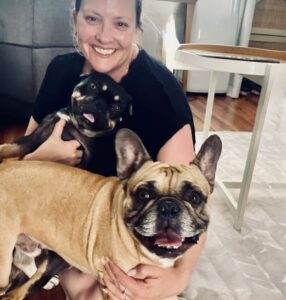
I’m a customer success leader focused on helping clients and teams thrive. Outside of work, I enjoy watercolor painting, beach walks, and spending time with my French bulldogs, Coco and Benji.